The best scene in Mad Men Season 4, Ep. 13 ('Tomorrowland') - the climax of the whole season, maybe of the whole show so far - was Peggy and Joan's smoking, cursing, laughing together at events and their lots. Christina Hendricks (Joan) gets lots of attention for her Monroe-/Jayne Mansfield-esque figure, but to me she's principally an amazing facial actress - Gong Li, Maggie Cheung, Stephane Audran are good reference points for her. Elizabeth Moss (Peggy) acts in a more balanced way, through her face and body and limbs, but opposite Hendricks her facial acting blossoms.
At any rate, in this crucial payoff scene, where the characters really spoke for the shocked audience as well as for themselves, Hendricks and Moss were on fire, bouncing off each other, their eyelines so exact and locked in, their mutually translucent skin making every other face on the show look like a mask, and so on. Related bouquets: the precision camera-work and editing captured everything with minimal fuss; the lighting people performed their usual miracle of making an ostensibly fluorescent-lit, totally interior room seem realistically lit yet still warm and flattering to faces and complexions; shrewdly chosen costumes - Joan in black and Peggy in dark-gray - made them business-like and adult; and thank god for cigarettes. (Cigarettes are so so good for visuals and acting, pointing scenes. I mean, just look at the images above.)
The upshot: in some respects, and regardless of what Matt Weiner wants or thinks or plans, Mad Men is Peggy and Joan's show now. And if it isn't? Well, we'd pay money to watch a post-Mad Men, rise and rise of Olsen Holloway in the '70s show.
Jan. 2011 update: Fabulous interview with Elizabeth Moss here.
One of the great pleasures of reading Austen is that she combines incredible control and wit with a lushness of vocabulary and grammar that makes most modern prose seem boring and puritan. It is as if the word went forth in the 1970s to every burgeoning, creative writing program that the only verb that should be used to mount dialogue is an unadorned 'says' or 'said'. And I've heard plenty of modern authors essay that this is one of the most golden rules of good writing.
It's a pleasure then to be only a couple of pages into, say, Pride and Prejudice and already people are replying, crying, scolding, sneering, whining, etc. often with an adverb in tow, e.g.,
"Do you not want to know who has taken it?" cried his wife impatiently.
"I do not cough for my own amusement," replied Kitty fretfully.
Go Jane.
I've long suspected that this layer of authorial pointing in Austen's texts is partially responsible for their great adaptability to the screen. Returning recently to Emma, one of Austen's last novels, I was struck by its great freedom of stage-directions often enclosed in parentheses within direct speech. There's a real sense of Austen pre-directing scenes that the reader is supposed to be mentally staging. E.g.
"A better written letter, Harriet (returning it,) than I had expected.”
"I trust, at least, that you do not think Mr. Knightley looking ill,” turning her eyes with affectionate anxiety towards her husband.
"For my part, I would rather, under such circumstances, fall short by two than exceed by two. I think you will agree with me, (turning with a soft air to Emma,) I think I shall certainly have your approbation, though Mr. Knightley perhaps, from being used to the large parties of London, may not quite enter into our feelings.”
"I have the honour of being acquainted with a neighbour of yours, (turning to Emma,) a lady residing in or near Highbury; a family of the name of Fairfax."
“Oh! very delightful indeed; I can say nothing less, for I suppose Miss Woodhouse and Mr. Frank Churchill are hearing every thing that passes. And (raising his voice still more) I do not see why Miss Fairfax should not be mentioned too."
"He never can bear to be thanked. But I thought he would have staid now, and it would have been a pity not to have mentioned. . . . Well, (returning to the room,) I have not been able to succeed. Mr. Knightley cannot stop. He is going to Kingston. He asked me if he could do any thing. . . .”
"These amazing engagements of mine—what have they been? Dining once with the Coles—and having a ball talked of, which never took place. I can understand you—(nodding at Mr. John Knightley)—your good fortune in meeting with so many of your friends at once here, delights you too much to pass unnoticed. But you, (turning to Mr. Knightley,) who know how very, very seldom I am ever two hours from Hartfield, why you should foresee such a series of dissipation for me, I cannot imagine."
Perhaps the most vivid example of Austen's directorial tendency in Emma occurs in the crucial and justly famous Box Hill scene. The garrulous but constant Miss Bates self-deprecates that she'll play a game of 'telling things' at its meanest, 'three dull things' level.
Emma could not resist. “Ah! ma’am, but there may be a difficulty. Pardon me—but you will be limited as to number—only three at once.” Miss Bates, deceived by the mock ceremony of her manner, did not immediately catch her meaning; but, when it burst on her, it could not anger, though a slight blush shewed that it could pain her. “Ah!—well—to be sure. Yes, I see what she means, (turning to Mr. Knightley,) and I will try to hold my tongue. I must make myself very disagreeable, or she would not have said such a thing to an old friend.”
That's already half-way to a winning screen version with Sophie Thompson (sister of the famous Emma T.) outstanding as the humiliated Miss Bates:
Obviously most of Austen's continued cultural success is traceable to her plotting skill, the vividness of her characters, the general depth of her insight into the minutiae of human interaction, and the like. But that she doesn't write stupidly bifurcated texts - dialogue over here, description over there - that she's always authorially describing and directing the dialogue helps a lot too. Insofar as we are allowed to project personal traits and destinies into new cultural settings for light sport, to that extent one feels certain that Austen would have made a great writer for the screen.
The original Day the Earth Stood Still (1951) mixes anti-war sentiments with genocidal fascism. Klaatu tells Earthlings to shape up - give up war and immediately start to learn and practice peace - or the galactic robot police will kill everyone:
'This Earth of yours will be reduced to a burned-out cinder.'[1]
The hapless 2008 remake didn't seem to know what it was saying by the end, but it had two basic novel ideas:
Extend the galactic police force's powers so that they can kill all the humans without toasting (and in fact pointedly, pristinely preserving) the rest of the planet
Broaden the aliens' essential interests from galactic order to order down on Earth as well, i.e., the remake's aliens damn humans not just (or even especially) as unrepentantly aggressive and dangerous generally but also as environmentally cavalier/dangerous to other life on Earth specifically
Richard Curtis's ghastly, self-defeating 10:10 campaign film: expresses the same genocidal fascist fantasy/temptation as the two DtESS films, and even shares the 2008 remake's exact emphasis. Yet reactions to the DtESSs have always been muted, whereas Curtis's film was an overnight, sensational disaster. Why?
On the one hand, the details almost certainly make a difference: we don't see Klaatu and Gort et al. butchering kids. And presumably the lifespan of Curtis's film would have been extended if Curtis had eschewed direct, Cronenberg-style explosion shots in favor of, say, just 'horrified reaction' shots (thereby leaving us to infer what happened), let alone if Curtis had told a much less (or even non-)violent story.[2] On the other hand, genocidal violence, whether eco-inspired or not, just does seem easier to take when the Final Solution-bearer is external/impartial rather than one/some-of-us. We've plenty of cultural practice with the former case from the Torah and Old Testament generally, but that practice absolutely doesn't transfer to righteous, eliminationist forces that are one/some-of-us. Rather, it's conventional wisdom that some-among-us will always fancy themselves as Jehovah/Yahweh-figures judging and damning us all, and that such people always have to be monitored and, if necessary, stopped. The moral seems to be that while environmentalists can try to point to Nature's judgment on human civilization, say, they can't, with profit, be caught imagining that they are avenging angels of that judgment.[3] That said:
or even this. Slightly illicit, avenging angel fantasies are big business, and a big part of the business in which Richard Curtis makes a living in particular.
[1] Update: imdb's ecarle reminds me that Klaatu depicts his home world as ruled by pervasive terror of summary execution:
"For our policemen, we created a race of robots...In matters of aggression, we have given them absolute power over us. This power cannot be revoked. At the first sign of violence, they act automatically against the aggressor... The result is, we live in peace, without arms or armies"
Dirty Harry raised to the power of Robo-cop on every corner. Very peaceful, no fire-power in that picture, no sir.
[2] E.g., suppose the 'no pressure' speeches mention the superheated, acidic surface of Venus as a model for a high-GHG earth. When the red-buttons are pushed, people simply disappear. Later it's revealed that they've been teleported to:
INTERIOR OF ROOM ON VENUS
The 20-25 people inside the room, including many of those we've earlier seen disappear, are gathered nervously around the room's single large window. 3/4 of the room is fairly empty, but every few seconds, a new person pops into existence including - Bing! - one of the schoolchildren from earlier.
EXTERIOR VENUS HELLSCAPE
Close up on an external digital thermometer with dual Celsius and Fahrenheit displays. It ticks over from 460 to 461 °C, 860 to 861 °F. Some more droplets of sulphuric acid rain hit the thermometer's exterior, melting part of the Fahrenheit display. Focus drops back (or Cut) to regretful faces of climate change skeptics of various ages pressed up against the large window. We hear the sound of another person popping into existence behind them. Bing! The heavily accented Tottenham Football coach from earlier starts in mid-prattle.
CLOSE UP LOOKING IN THROUGH LOWER HALF OF WINDOW
Faces of horrified school-children, including the child who just materialized pushing in past adult legs to get a view out. Their eyes widen as more sulphuric acid rain and smouldering, dissolving crud spatters and slides down the window in front of them while, from somewhere behind them, the adult, know-nothing, Football coach voice prattles on...
[3] To be sure, lefties, let alone enviro-lefties in particular, are probably a minority of apocalyptic fantasists, especially in the US. The Timothy McVeigh/far-Right/quasi-secessionist end of US political life is currently booming, much as it did during the Clinton years.
Mad Men Season 4, Ep. 9 ('The Beautiful Girls') was extraordinary. While remaining true to a set of characters, it meditated on the overlapping destinies of 5-6 micro-generations of women. Apparently, Sondheim's Follies, which opens and closes with the number 'Beautiful Girls', is an important reference. Will have to check that out now.
At any rate, the episode climaxed with a remarkable series of Resnais-meets-Demy, female tableaux, anchored by the amazing facial acting of Christina Hendricks. Just, wow.
I don't pretend to know what to think of the final image of Peggy, white-gloved (like Betty), smiling. She's less touched by Sally Draper and Miss Blankenship than the others of course, but evidently there's a lot more going on than that. Peggy looks the best pulled-together she ever has in that final shot. On the one hand, she looks like she's off to the Country (white privilege) Club, which, given the racial themes of the ep., would be somewhat disappointing. On the other hand, her hat/bonnet is halo-like, and the light that flares up off the closing elevator doors creates angels' wings for her. A Catholic icon or an astronaut like Blankenship? I dunno, but either way this is impressively suggestive cinematography.
And is Mad Men secretly, actually Peggy's memoir/novelistic reconstruction of her time with Don Draper (written when, say, she's herself an '80s, eminence grise of the ad. world)? Probably not, but that possibility, among others, was certainly opened by the end of this extraordinary, gut-twisting, brain-bursting episode. For some reason too, the end of the ep. made me think of (is soundtracked internally for me by) this piece by Olafur Arnalds:
One flaw with the ep.? Megan (Jessica Pare) half swallows her lines before and after Sally's heart-breaking 'No, it's not'. Of course, Megan is supposed to be a little awkward, unformed, not especially poised, possibly vaguely promoted above her abilities because of her looks (although I don't quite get those beyond her impressive, but somewhat generically runway model-ish height and figure), etc.. So her verbal clumsiness is arguably a feature of and not a problem with Pare's performance. Still, the near-('80s Valley-girl-to-early-Anne-Hathaway) lack of enunciation, the speaking from the back of her mouth and in scattered sentence fragments grates. It makes Megan (and Pare) stick out like a proverbial sore thumb on Mad Men. The end of ep. 4.10, indicating a wider role for Megan on the show therefore currently looks to me like a mistake, even setting aside the dread that a Don-Megan 'ship inspires. Update October 5: The end of ep. 4.11 confirms that Mad Men has indeed made one of its occasional blunders (comparable to some about Betty last season), this time with Megan. Having been quite inarticulate and apparently unsophisticated up until this point, Megan is now quickly and implausibly revealed as a college grad., as super-calculating and worldly, and as, in fact, pretty much just a plot device to heighten Don's damage-done-already to Faye. Having Faye breach her Chinese wall at Don's suggestion was enough: it's a fateful self-betrayal by Faye that was well set up over a couple of eps. The additional element with Don and Megan then and there is insane, soap-erific overkill. And, realistically, that they actually have sex brings to a head that the show has gone to the well of spontaneous, causal sex too often. It's become a crutch for the writers at this point. Don going out for a bite with Megan and having a good time (i.e., her surprising us and him with her depths, etc.) would still have been unnecessary heightening for Don's situation with Faye, but it would at least have satisfied basic believability. Badly done Mr Weiner. Badly done Erin Levy (the official, sole author of ep. 4.11).
The stunning opening to Cilla Black's original tv show: This is a very fine performance and arrangement of a White Album out-take that Paul McCartney gifted to his scouse friend and fellow George Martin producee. McCartney's original demo. had traces of Jobim in it:
but Cilla's version rotates that influence 90º through Bacharach's appropriation of that tradition, surprising/climaxing with a trace of Bond/John Barry in the chorus. Marvellous stuff that anticipates some of where McCartney would go post-Beatles.
It would be interesting to know how much of Cilla's arrangement McCartney was responsible for. And if the answer to that question is 'a lot', whether he'd have thought of developing the song in that direction without Cilla's Bacharach-laden example in front of him? At any rate, here's a snippet of Paul and Cilla setting up to record the song:
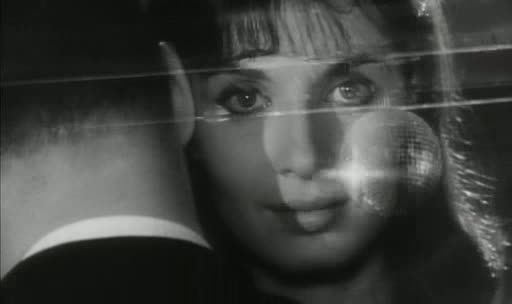
In the light of his death last week, I finally got around to watching Claude Chabrol's Les Bonnes Femmes (1960). Just as advertised (by various Obit. and Appreciation writers), LBF's a great film - ingenious, frightening, maddeningly elusive but also unbearably direct, unforgettable. It seems obvious in retrospect that LBF is an important influence (directly or indirectly) on the intellectual 'shock' cinema that stretches from Haneke to directors such as Noe and Breillat.
I'll need to think the film over a lot more to be sure, but, right off the bat, LBF appears to fit beautifully with Psycho and Peeping Tom as a panel in a 1960 horror triptych about men and women as largely, mutually uncomprehending, alien species (though distance from self or self-incomprehension is also important in these films) in something like a state of war, or, perhaps better, a parasite-host symbiosis or a zoo-animal/-keeper relation. The last is the key, cruel suggestion of the terrific zoo scene in LBF (although the audience isn't in a position to decipher that suggestion properly as it's made, i.e., first time through[1]). [Update: I used to have a clip of the scene here, but it's been removed from youtube, so a couple of images will have to do.]:
P, PT, and LBF all argue that only various sorts of social norms and self-delusions prevent the horrifying facts about ourselves from being obvious to all concerned. LBF's coda flags explicitly that those self-delusions can include novel and film conventions and expectations about romantic heroines and pretty Parisiennes in particular, i.e., factors that have shaped and distorted our view of the film we've just been watching. On the one hand, that coda practically demands that the audience rewatch LBF immediately (I immediately rewatched about half). On the other hand, some viewers will inevitably react angrily to this sort of meta-manoeuver, resent that Chabrol has so manipulated them, and so on. Indeed, LBF was a financial and critical failure in 1960 (according to imdb, it led some Parisian viewers to break their cinema seats), and it wasn't released in the US (in NYC) until 1966. At least LBF didn't effectively end Chabrol's career in his home-industry the way PT did Powell's.
LBF is dee-pressing, and brilliantly nasty, albeit in a way that's fairly familiar to us these days from Haneke, Breillat, et al.. But Chabrol got there first, in something like the way Hitchcock did with Psycho. 1960-vintage Chabrol and Hitchcock was quickly out-stripped in the explicit sex and violence stakes by imitators and acolytes, and by the directors' own later selves (some contemporary viewers may be incredulous at LBF's pre-film, R-18 certificate -'Ce Film est interdit aux moins de 18 ans'). But both P and LBF are such artful and pure examples of the film sub-genres they founded that they're hard to improve upon in any case, and the subsequent jading of our palates in fact only makes them more watchable now.[2]
LBF wobbles slightly and almost falls over first time through (at about the half-way point in my case). We flail and lose patience as we're left suspended, not knowing how to understand/read what we're seeing. That's risky, but Chabrol's risk-taking pays off big time by the end of the film, and on subsequent viewings. Les Bonnes Femmes is a masterpiece, probably theoriginal brainy, malevolent masterpiece.
[1] Indeed, first time though we're tempted to exactly the wrong (or at best strictly one-sided) analogy: biker guy is like the caged animal. Some reviewers, apparently eager to demonstrate their superiority to Chabrol's relatively open-textured film, overlook this and falsify which conclusions LBF allows anyone to draw, as it were, in real time, e.g., Mick LaSalle's intemperate remark: "The women go to the zoo and see a lot of beautiful animals in cages. We get the analogy. The gals don't." But, as we've seen, LBF initially, principally signals that the biker guy is (perhaps guys in general are) the caged animal. That is, this important scene, like others in LBF, opens up multiple meanings, and an alert audience has no choice but to try to juggle these partially competing ideas (keep them all aloft) as the film unfolds and springs its traps. Taxing the audience in this way is a signature of a certain sort of potentially great film-making, albeit a sort that's not to everyone's taste (e.g., some people simply dislike all demanding films). At any rate, LaSalle's dismissive yawn at LBF is quite unwarranted. It's also very revealing. One of Chabrol's most famous films, Les Biches (1968), explicitly asks 'Who's the hunter, and who's the hunted?'-type questions. A reviewer for a major metropolitan paper in 2000 should have been able to be sensitive to and non-reductive about different possibilities from Chabrol.
[2] Modern audiences have to work a little bit to appreciate P's and LBF's original 'hot stuff'/scandalous sides. The upside of that distance, however, is that it takes the edge off the films' contents and makes them more acceptable and accessible to broad audiences than before. Hard-R '70s films and their indie/foreign extreme successors today, by way of contrast, remain beyond the pale for many people. It's just a fact that Looking for Funny Games with Mr Straw Dogs Irreversible Goodbar rarely comes to a multiplex or a dvd-player anywhere near most of us.
Act MP David Garrett says that he took the idea of stealing the identity of a long dead baby to procure a fraudulent passport for himself from Frederick Forsyth's 1971 novel The Day of the Jackal (filmed by Fred Zinneman of High Noon fame in 1973). Another '70s pop-culture phenomenon that prominently featured shenanigans about dead babies was The Omen. Wiki summarizes the beginning of its plot as follows:
The infant son of Robert Thorn (Gregory Peck) and his wife, Katherine (Lee Remick), dies shortly after birth in Rome. Out of concern for his wife's mental well-being, Robert is coerced into substituting the dead child for an orphan whose mother died at the same moment by Father Spiletto (Martin Benson), without telling her the truth. Katherine and Robert name the child Damien (Harvey Stephens). Shortly afterwards, Robert is named U.S. Ambassador to Great Britain.
It later emerges that Damien is the anti-Christ, and that the Thorns' dead infant son was in fact murdered (by, as it were, anti-Nuns). The plan is for the anti-Christ to be raised as a child into the friends-of-a-US-President family then, once grown, for him to use those connections to become US President, or Helen Clark, or some such thing. That plan comes to something like fruition in Omen 3: The Final Conflict, the first and only Hollywood film to have two Kiwi leads (Sam Neill and Lisa Harrow). Coincidence? I think not. Dream bigger darling Mr Garrett: Roger Douglas stabbing someone in a cathedral, Rodney Hide drowning under ice, fending off Sensible Sentencing Trust wolves, the permutations are endless. Photoshoppers and youtube parodists, start your engines.
Update Sept 24, 2010: Garrett has resigned from Parliament and, according to the NZ Herald, claims that dark forces are at work within the ACT party. The Herald also reports that ACT MP Heather Roy, denies being behind the leaks that doomed Garrett:
'She laughed off the comments about dark forces, saying, "I think everybody might have been reading too much Star Wars."'
Wrong answer. Not dark enough. Try harder. Oh, alright....