Totally the sort of band I dug the hell out of in the '90s. Checking them out further, DVGs are just fun fun fun as far as I can see:
Awesome vibe. Great fun.
Totally the sort of band I dug the hell out of in the '90s. Checking them out further, DVGs are just fun fun fun as far as I can see:
Awesome vibe. Great fun.


The B-sides of Suede's 'The Drowners' single were 'My Insatiable One' and 'To The Birds'. Taken as a whole, this was the best single I've ever actually bought. Unfortunately for Suede, their first three recorded songs were their best; they never hit these heights again.
Lots of backing tapes surely but enough live stuff to be impressive. On this evidence, LRD and Stuart Prices's projects more generally need to play live a lot more than they do. In general, too, a new LRD album would be very welcome.

Rolling Stone assessing the remastered version of Rage Agianst The Machine's eponymous debut:
The rap appropriation has lost the force of novelty, of course, but blaming Rage Against the Machine for Fred Durst is like blaming Abraham Lincoln for John Boehner
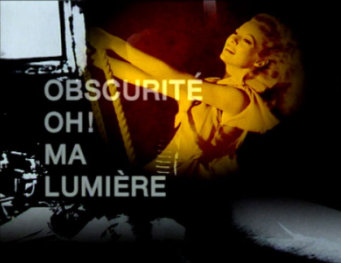
Gap-filling on Sight and Sound's new Hot 100, I'm checking out Godard's Histoire(s) (1988-1998), which some have praised, see, e.g., here and here (for a vital aid). In his New Biographical Dictionary of Film Thomson lauds as follows:
Of course, it was natural that Godard would provide his own retrospective—and sweep up the entire medium. Histoire(s) du Cinéma is a great catalogue work, worthy of Robert Musil or Walter Benjamin—or Chris Marker. But in its astonishing beauties, and the suggestiveness of its editing, one may still see and feel the Godard of the early sixties. Thus, the Histoire(s) reasserted, beyond doubt, that his is one of the great critical yet poetic minds in the medium.Unfortunately, so far (just one headache-causing hour in) I feel like Thomson's more caustic remarks about Godard's 1950s criticism apply equally well to Histoire(s):
"[T]ruly useful insights were offered in writing that was appalling, trite, chaotic, and gratuitously unreadable. It came armed with frightful name-dropping from literature and painting. Hardly a film could be classified without reference to Faulkner, Proust, Auguste Renoir, or Velázquez. In part, this was his need for classification, the unappeasable urge to cross-refer rather than to describe a thing itself. And these references are meaningless....Godard’s criticism is so aggressive that one feels only its insecurity... It means that his articles are addressed to himself, rather than to readers. The tone is austere and forbidding, as if to exclude others from cinema in the very act of celebrating it."Godard actually says relatively little in his own voice, and there it's mostly sententious nostrums to which one mostly wants to shrug or perhaps laugh (much as you would to a standard, empty political speech). But occasionally he makes a factual claim, some of which are plainly wrong, e.g., at 19 mins into the first part of the doc., Godard claims that Howard Hughes was a producer (producteur) of Citizen Kane, which is false. (Compare: a fluffy, largely content-free political speech that nonetheless makes a few it's easily-checked claims about unemployment rates or Benghazi or whatever.... that turn out to be flatly false.) The impact is devastating... it becomes very hard to stick-with Godard, to take him seriously. Overt contradictions such as between 'Cinema is not part of the communications industry or entertainment. It is part of cosmetics, the industry of masks.' (2nd part, 7 mins in) and 'It [cinema] boils down to entertainment. It can't be explained otherwise.' (2 minutes later) don't help either.
Since Godard doesn't care enough to get basic stuff right it's hard to have faith in or even ascribe determinate content to his more oracular, necessarily uncheckable remarks. Whether Histoires(s) can be satisfactory conceived as its own self-contained mega-video-art-piece/work of political science fiction remains to be seen, but on current evidence (update: 2 hours in) it can't be. Rather it appears to just be a mess, stuck in some messy zone between The Power of Nightmares, Sans Soleil, Cremaster Cycle, and Inland Empire, and decidedly inferior to all of those boundary points.
So who got Godard's Histoire(s) onto the Sight and Sound list (and ahead of, I dunno, Rear Window, M, NbNW, Touch of Evil, Night of the Hunter, and Sunset Boulevard)? Jonathan Rosenbaum, Richard Corliss, and who else?
Update: Finished it! Good God, well that's 4+ hours I'm never etc.. One of the (in my view, relatively few) highlights is his tribute to Hitchcock in the penultimate Chapter 4a (Le Contrôle de l’univers (1998) - The Control of the Universe). Godard's characteristically hyperbolic remarks (whch work much better accompanied by counterpointing, often slow-mo Hitchcock clips) are as follows:
We forget why Joan Fontaine leans over the cliff.
Why was Joel McCrea in Holland?
What confession did Montgomery Clift keep secret?
Why did Janet Leigh stop at the Motel?
Why does Theresa Wright still love Uncle Charlie?
What isn't Henry Fonda entirely guilty of?
Why did the American government hire Ingrid Bergman?But we remember a handbag.
But we remember a bus in the desert.
But we remember a glass of milk, a windmill, a hairbrush.
But we remember a row of bottles, a pair of glasses, a musical score, a key chain.Because with them and through them Alfred Hitchcock succeeded
where Alexander, Caesar, Hitler and Napoleon failed:
In taking control of the universe.Maybe 10,000 people haven't forgot Cèzanne's apple
but a billion remember the lighter in Strangers on a Train.Hitchcock, the only accursed poet to meet with success.
Our century's greatest creator of forms.
Forms tell us what is at the bottom of things.What is art, if not the way forms become style?
What is style... What is style, if not man?So it is a bra-less blonde tailed by a detective scared of heights
who proves that it's all cinema, that is, child's play.
Update: Fave MDNA tracks after 1.5 full listens are Superstar, I'm a Sinner, Love Spent, and two bonus tracks, I Fucked Up and B-day Song. Still, none of these is an outright winner in my view. The best track on MDNA wouldn't make it into the top half of the tracks on Robyn's Body Talk (2010), which should be a little depressing to her M-ness. (Robyn's key collaborator Klas Ahlund co-authored Some Girls on MDNA, and that is indeed one of the better tracks. But all I could think of when listening to it was that Robyn would be a better fit for its attitude-heavy, robot-schtick.)
Update 2: What MDNA really needs is something like a cover of a great but relatively obscure Abba song to lift it. I'd recommend this forgotten gem from Voulez-vous for the purpose:
Stepford wives who are we to complain?And Thom Yorke told the NY Times that the excellent Bodysnatchers from In Rainbows (2007) was "inspired by Victorian ghost stories, The Stepford Wives and his own feeling of 'your physical consciousness trapped without being able to connect fully with anything else.'"
Investments and dealers investments and dealers
Cold wives and mistresses
Cold wives and sunday papers.
But this influence appears to have first manifested itself in Jake Scott's acclaimed video for Fake Plastic Trees, one of Radiohead's most beloved early songs.
The video's supermarket setting reprises in part the film's famous, post-climactic 'supermarket scene' (although the vid's supermarket unlike TSW's is a blinding, high-contrast, sci-fi white, which may well reflect another specific influence). But Scott's video also makes very extensive use of very tight/shallow focus which is TSW's visual signature more generally.
My video puts TSW's big focus-pulling scenes and shots together, beginning with the supermarket scene (which the 2004 remake butchered). I cut my video to Radiohead's Fake Plastic Trees, for all of the obvious reasons mentioned above, but unfortunately that soundtrack has been blocked. I therefore recommend that (at some point) you mute my vid. and synch your own copy of FPT up to it from the top (it works wonderfully!).
I've also assembled some frames from FPT's video and some frames from TSW to help make the parallelism clear.


I highly recommend TSW. Along with Cronenberg's Shivers (1975), it gives you the perfect image of the backstory to current, unending cultural wars (particularly in the US).
Update March 13, 2012:
Consider the posh-/alterna-babe who flickers discreetly throughout the FPT vid (and whose look roughly crosses the automatized Joanna Eberhart (Katharine Ross) from TSW's supermarket scene with Andie McDowell's character from Four Weddings and A Funeral):
The second time the posh gal appears she trails a small, white dog with brown patches. But Joanna Eberhart's small, white dog with brown patches, Fred, plays a crucial, extended role in TSW (1975):
Note too that the final track on Radiohead's OK Computer (1997), The Tourist, begins with the paranoid/depressed singer imagining himself automatized/replaced and triggering a pet's suspicions:
It barks at no one else but me
Like it's seen a ghost
I guess it's seen the sparks a-flowing
No one else would know.
While the trope of robots who pass as humans but who can't fool animals is a sci-fi commonplace, in the context of general Radiohead interest in TSW, the details of dogs and sparks rings the TSW bell again. And, of course, the FPT video's focus-pulled/differentially blurry images was evidently a touchstone for OK Computer's cover-art:
In sum, TSW (1975) is occasionally overground in Radiohead 2.0 (Kid A and after), but its themes and visual signatures are a component of Radiohead 1.0 (pre-Kid A (2000)) at its most triumphant.

Further overall comparisons: DM is far less accomplished than the big alt-rock albums of its year (which I listened to at the time) such as Superunknown, The Downward Spiral, Dog Man Star, Live Through This, and Weezer. DM strikes me as about as good as Green Day's debut Dookie (1994) or, maybe, about as good overall as famously uneven records such as Underworld's Dubnobasswithmyheadman (1994) and Radiohead's debut Pablo Honey (1993). Blur's Parklife (1994) (which I didn't listen to at the time) is again markedly superior (and just feels much more musical than) Definitely Maybe does.
What then explains DM's exalted reputation? Here's my hypothesis: Oasis cribs freely from The Beatles throughout (albeit without quite building up to the sorts of well-worked songs Oasis would achieve on WTSMG, let alone scaling the heights of Beatles-inflected popcraft found on average XTC records). This does momentarily excite the average Anglo-phile pop- lovers ears, perhaps beyond reason. Putting that flirtatious approach to the UK pop audience together with the Gallaghers Bros' swagger and image seems to have acted like catnip for UK audiences and critics alike. Listened to with a clear head, however, DM is definitely average.
Mould's video featured Blur's Damon Albarn and Graham Coxon in their pomp, and a marvellously expressive, gamine, balletic model, Amanda Doyle (who's often been misidentified as Stereolabs's Laetitia Sadier, who did To The End's French backing voice) as the 'mystery woman' in an uncertain love triangle.
Doyle, Albarn, and Coxon make an incredibly pretty trio (one that's significantly more youthful and charming than Resnais's), and in Mould's hands a warm, romantic, relatively conventionally arc-ed (cynics might say, 'Tatler-ific') confection emerges, one that's interestingly orthogonal to Resnais's glacially paced and legendarily chilly 'classic'. While its influence on things like The Shining is clear, Marienbad is now mostly ignored and forgotten, and mocked to the extent that it's not. (At least in the English-speaking world, Marienbad may currently be less famous than and certainly is less loved than Pauline Kael's dismissal of it as a "high-fashion experimental film, the snow job in the ice palace" and as the butt of her "People are hosting 'Come as the Sick Soul of Europe' parties" joke.) And that's to say that Marienbad is for the most part a 'classic' in a Twainian sense: it's a film that many more people want to have seen than who actually want to see it.
Blur's video in 1994 changed the equation for Marienbad, at least to some degree (not least because it reminded people that Marienbad would have been a lot easier to take without its unpleasant, mostly organ score: if, say, Herrmann, or Badalamenti, or, yes, even Blur had scored, things could have been very different for the film over time). In my view the song's one of the core triumphs of Britpop (and one of the 'best songs of the '90s period), and the vid. is a marvel of the smartypants/art-school (say, Velvets/Bowie-ish) side of pop music more generally. If you've ever liked that side of pop then moments like U2 getting to make films with Wim Wenders, and Blur having their way with an icon of the Nouvelle Vague are just jam. They are as much part of the core appeal and fascination of pop/rock stardom as anything else is, at least for that audience.
I hope that this vid. stimulates discussion about actual and possible relations between pop culture and high art culture. And the vid. should build the audience for both Resnais and Blur: film snobs (you know who you are) should listen to Blur if they haven't already, and Blur-fans now have even more of a pathway into one of the most arduous of art-films.

The thing I find most disheartening of this campaign is the difficulty of talking about large ideas on a large scale, because the news media can’t cover it and candidly, my opponents can’t comprehend it…Let me talk for a second about technology and grand opportunities. Other than Ronald Reagan, I know of no Republican in my lifetime who’s been able to talk about this. That’s why I’m still running.Keep talkin' Newt. The men in white coats are on their way...

The violence in Sunrise's (abortive) murder plot destabilizes the narrative, pitching it into Night of the Hunter/Vertigo/Blue Velvet territory. The Man originally responds to The City Gal's drowning suggestion by attempting to throttle her, and later he reacts to The Obtrusive Man who hits on/harasses The Wife by just-barely-faux knifing him in the face (David Lynch recycles the latter scene as Dorothy Vallens's just-barely knifing Jeffrey in the face). These sorts of scenes (up to and including the Man's second near-strangling of the City Gal at the end of the film) mark The Man as seriously unstable/sociopathic, which in turn makes the wife's forgiveness etc. of him unbelievable and dangerous. If we interpret the whole film as 'what actually happened' then one must fear for the Wife and the Baby's safety long term. The principal way around this problem is to embark on a grand overall re-reading of the film: everything from the Man going to bed thinking about killing his Wife (which is visually signposted by the superimposed waters of the lake) until the final 'Finis' sunrise is the Man's dream-state. That's some elephant to swallow, and I don't think that Murnau compels us to accept such an interpretation. Rather I think that Murnau opens this as one possible interpretation of Sunrise, just as Hitchcock protects the readings that Vertigo's several discontinuities open (most famously the 'Incident at Owl Creek Bridge' interpretation of everything after Vertigo's apparently-impossible-to-be-saved-from opening scene). Our projected, streamlined, more-Lubitschy Sunrise would trade away this sort of haunting, crazy richness for greater naturalism and linear intelligibility.
'You're a couple, especially when your bodies double.
To placate, and then you wait for the next Kuwait. Karmacoma.'

