Showing posts with label 2000s. Show all posts
Showing posts with label 2000s. Show all posts
Sunday, October 27, 2013
Rachel's Reflective Surfaces (2003)
Go to 2m 50s in. (There's some recent problem with youtube coding for start-times of embedded videos that prevents this from happening automatically.)


Monday, March 11, 2013
Winners' History and Whiners' Whining

Steven Hyden's thoughtful and provocative seven-part series of articles, "The Winners' History of Rock And Roll", posits that:
In the late '60s, Led Zeppelin represented a new choice between.. "a clearly defined mass taste and a clearly defined elitist taste." This dichotomy would define the rock discourse for the next several decades, until elitist taste finally eclipsed mass taste due to audience attrition. Today, the best rock bands, almost without exception, make records with no chance of reaching the "mass taste" audience. You can blame that on changes in mass tastes — as much as "mass tastes" still exist, anyway — as well as revolutions in media and the record industry. You can also blame the bands, many of whom (intentionally or not) have sequestered themselves from the very people who used to be rock's core constituency.This has led me to think about exactly how far I've internalized the elite-taste/indie/NYC-centered vision of rock's possibilities over the last decade or so. Here, I guess, are some of the artsists I've definitely dug over the period that may fit Hyden's model of "sells out midsize theaters in large cities and elicits blank stares every place else... a group that appears to have little or no concept of what a beer-chugging, Middle American audience might want out of a rock record":
- Dirty Projectors
- LCD Soundsystem
- Bon Iver
- The National
- Sleigh Bells
- Beach House
- Passion Pit
- Arcade Fire
- The Rapture
- The Strokes
- The Shins
- The Decemberists
- Bat For Lashes
- St Vincent
- Broken Social Scene
- Joanna Newsom
- Panda Bear
- Metronomy
- M83
- Anna Calvi
- Ariel Pink's Haunted Graffiti
- Jens Lekman
- Fleet Foxes
- Life Without Buildings
- Interpol
- Swans
Saturday, February 09, 2013
Life Without Buildings (my new favorites)
'Don't leave the visual world!' Who writes lyrics like that? I am digging this band.
Amazingly, the released live version of Love Trinity may be even better:
The live confirms that although Sue Tompkins is an unorthodox vocalist (and an acquired taste) she's incredibly precise, and technically quite accomplished.
Friday, September 14, 2012
Maybe contemporary film isn't so bad
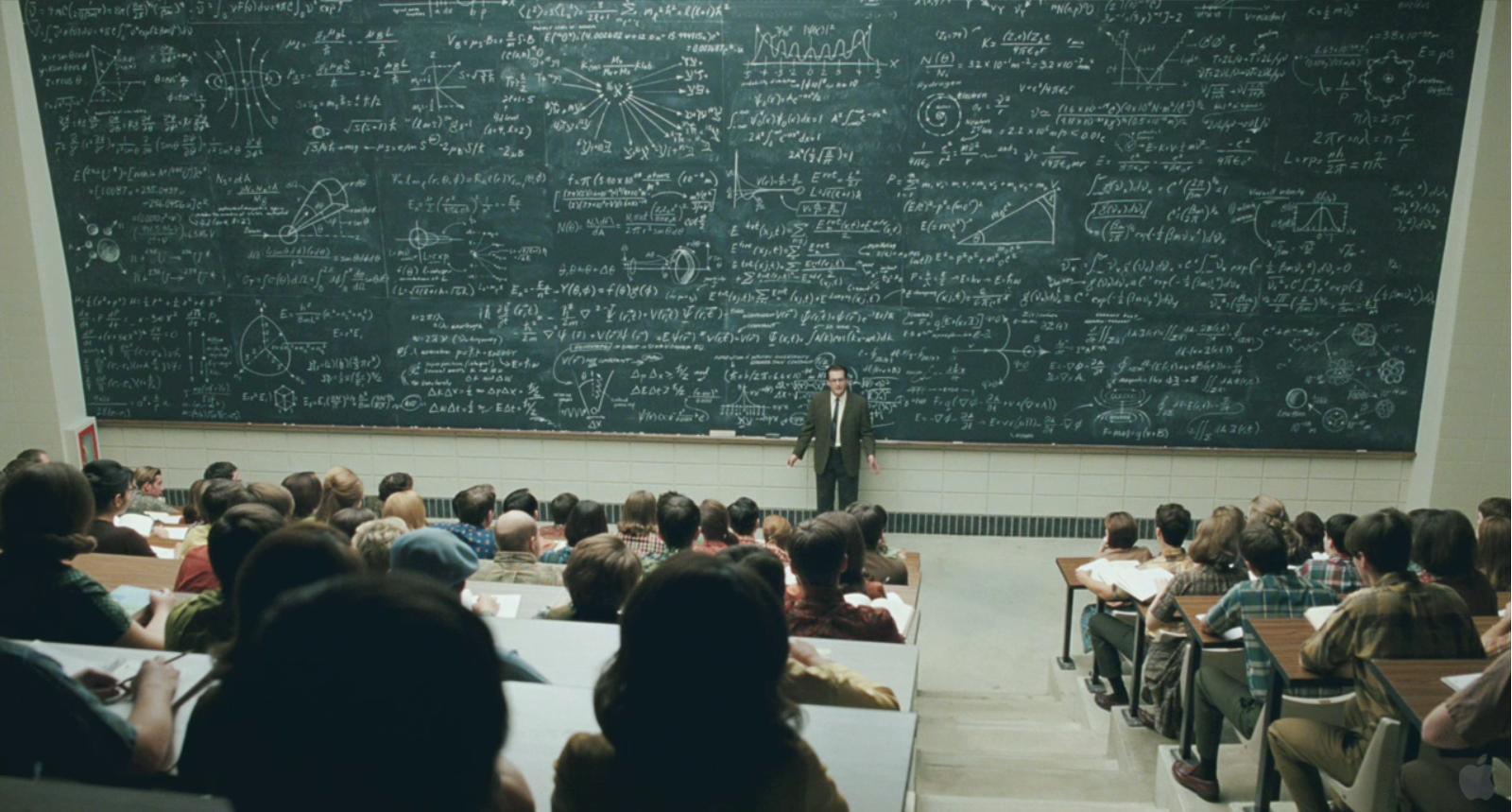
An artist relative o' mine who lives on a small Pacific Island that mostly only gets Hollywood blockbusters/Oscar winners on (pirated) dvd asked me to burn him a few dvds of relatively good recent stuff to take back with him, i.e., that he'd otherwise be unlikely to see.
I wanted to cram in 2 movies per (single-layer) dvd (so no epics), and, since I had only a fairly crappy burner program, I couldn't use any movie files with soft subtitles.
Here's the eight films (four pairs) I came up with:
- (Untitled) (2009)
- A Serious Man (2009)
- Moon (2009)
- Following (1998)
- Fantastic Mr Fox (2009)
- Winter's Bone (2010)
- Let The Right One In (2008)
- In Bruges (2008)
Friday, August 31, 2012
End Credits Audio from (Untitled) (2009): David Lang's Stick Figure
The climax of Jonathan Parker's (Untitled) (2009) is, in many ways, its end credits. There we hear the first straightforwardly gorgeous piece of music in the film (although possibly only the prior ninety minutes of thonk-bonk contemporary music has allowed us to hear it as gorgeous and not monotonous): just over half of David Lang's Stick Figure (the Fourth Movement of his Child (2001)) performed by the Italian contemporary music ensemble, Sentieri Selvaggi (a 2003 recording that's available on iTunes, Amazon, etc. at an incredibly reasonable price). One way of interpreting the piece in context is as the finished version of the last piece of noodling that we hear from the composer within the film, Adrian Jacobs (Adam Goldberg).
(Untitled) (2009) is a pretty good film with its own uniquely equivocal mood and tone, and a standout performance from (should-be-a-star) Marley Shelton as downtown NYC gallery owner, Madeleine Gray. Definitely worth checking out (esp. if you've ever dabbled in art-walks, gallery-hopping, and the like).
Sunday, June 10, 2012
Misheard Lyrics: Enchanted's That's How You Know
I hear the best couplet from Enchanted (2007)'s show-stopper as:
You've got to show her you need herApparently the real lyric is
Don't treat her like a Magritte-uh
You've got to show her you need herSigh. I know the official lyric makes more immediate sense, but my mishearing is much better thematically, where it counts. Note that Enchanted (2007)'s charm confirms the common wisdom that 2007 was a movie year for the ages: even the very silly movies were pretty great (OK, the last act of Enchanted is everything you fear it might be, so 'pretty great' is stretching it: it's two thirds of a pretty great film.)
Don't treat her like a mind-reader
Note that THYK missing out on the Best Song Oscar at the hands of Once's 'Falling Slowly' was a bit of a crime. While Once (2007) itself was pleasant enough, FS always struck me as a pale imitation of slow Radiohead stuff like 'Fake Plastic Trees' and 'No Surprises'. The problem for THYK appears to have been at least partly electoral in nature: Enchanted got three of the five song nominations, which almost certainly led to a division of support. I conjecture that if THYK alone had been nom'd from Enchanted then it would have romped home (esp. if Eddie Vedder's 'Guaranteed' from Into the Wild (2007) had picked up one of the now open nom slots, thereby dividing Once's 'indie' support base).
Wednesday, February 15, 2012
Some scattered thoughts on Sweeney Todd (2007)


While Sweeney Todd (2007) is impressive in many ways (e.g., the ghastly kills are amazing, esp. the bodies hitting the basement floor; the horror side of ST is in great shape), a lot of the fundamental choices the film makes are just not to my taste. These choices may work for someone else, but not for me. Here are some of the things I find off-putting.
1. Extreme digital color manipulation. This is a personal pet peeve of mine. I like real colors, light to bounce off things, and darks to be real absence of such light. Burton here, like most modern directors doesn't do that, rather he uses post-production to squash color spaces down to just a few frequencies, swathes of the few allowed colors are all effectively painted on later rather than photographed, and darkness and shadow is rendered by a kind of soupy dispiriting gloom that lacks any of the interest and tension of real dark (see, e.g., classically things like Dirty Harry (1971) and Klute (1971) and Godfather 2 (1974), and for a contemporary case, see the final act of 4 Months 3 weeks 2 days (2007).
2. Virtual Camera/CGI overload. Can't take it anymore, my eye just rejects it. So, for example, one never for a minute believes the sets of ST the way you do in such setting-comparables as The Elephant Man (1980), Oliver Twist (1947), or Topsy Turvy (2005). For another example, ST begins with a by now thoroughly done-to-death, CGI Rube-Goldberg-machine title sequence. (I hereby call for a moratorium on the type!).
3. Movie Musicals without dancing (esp. in English) make me mad. If people are going to break into song I want them to move. It's the great movie musical tradition, and in my view any director should to think very hard before departing from it: any reason for not moving tends to be an argument against singing too.
4. F-ing Sondheim. S's songs here don't have melodies. There's not a single song in ST that anyone can whistle or even remember. ST is an interesting experiment by Sondheim, but it's a musical failure in my books. Mine is doubtless a minority view, but for myself I'd trade the whole of Sondheim's songbook here for a single Consider Yourself or I Could Have Danced All Night or Don't Rain on My Parade, let alone for a true singing and dancing tour de force such as Step In Time! I guess that complaint marks me as some sort of movie musical conservative. For me, no matter what Sondheim gains by eschewing melodies and memorability, the loss is so great that it can't make sense.
5. Narrative experiments that don't work. I frankly hated, could not believe that we didn't go back to Joanna and Anthony after Todd's death. Making the final time we see them together be a leave-taking and clock-starting moment ('I'll be right back. Half and hour and we'll be free.') makes the film feel incomplete. This was so bizarre, I immediately rewound the film,sure that I must have missed something in that case. But, no... it's just ridiculous film-making. (But see below for a slight proviso)
6. London/humanity as a hellscape meets melodramatic affectation. Huh? The film pursues a dual course of presenting lots of melodramatic twists and turns and coincidences - that is it participates very knowingly in the Penny Dreadful genre - but it also tries to provide a serious misanthropic/dark/skeptical analysis of (an early draft of) the modern world/metropole, i.e., that it's a hellscape where everybody feeds off everybody else (where Todd just makes that feeding completely literal). But these two sides of the film pull apart - the film essentially asks to be taken seriously and not-so-seriously at the same time, which is incoherent. Theater is a less realistic medium than film so may be able to get away with this sort incoherence more. For one very minor example of how the different impulses at work in the film cause chaos consider that while the boy Toby waits in Lovett's meat-grinding basement (he's actually imprisoned but doesn't realise that yet), he only starts to suspect that something terrible is going on when he eats a pie and discovers half a finger-tip (with a whole nail) in it. Only subsequent to that does he, as it were, look up and notice all the obviously human body parts going into the grinder. This is a gross-out, Penny Dreadful (to which stupid Hollywood stuff is the heir!) plot-point. But, it cuts against the kind of reality that the dark/skeptical analysis needs: we're supposed to believe that Lovett's pie-business is thriving at this point (that it fits beautifully with the society) so she must have figured out some way of preventing identifiably human material from getting into the pies - since it's game over, everyone will be hanged if there are any mistakes on this front. So, the chance that Toby has of hitting a pie with an identifiable element = the chance that Lovett's whole enterprise collapses (if Toby hadn't eaten the pie a paying customer would have and then the whole game would be up in any case), and that's to say that Toby's discovery of a finger (as opposed to him noticing what's going into and is lying on top of the grinder) doesn't make sense except as farce. What happens deepens the farcical-ness: Toby apparently escapes and we see Todd and Mrs Lovett walk directly out a door in the back wall of the basement into the sewer system to check the boy's obvious escape route. Some prison! Of course, Toby didn't escape that way and is instead under a grating under the floor in the basement, but, that just makes him thick for not walking out the door we just saw Todd and Lovett go through.
7. Good but v. irritating twists. Sweeney Todd ends up slashing the throat of a crazy street person who turns out to be his long lost beloved wife. But, hang on:
(i) If the wife didn't die from her poisoning herself then surely the Judge who so pursued her would have known about/noticed that?
(ii) That means Mrs Lovett's been taking an incredible risk all along by having the crazy lady hang around since she might recognize Todd at any time or he might recognize her (or both)
(iii) Lovett tells Todd at the beginning of the film not just that the wife took poison but also that people avoid renting her room upstairs because they think it's haunted. Whether we take that literally (they think the dead person's ghost haunts) or metaphorically (they think just that there's something creepy about the room) somebody's death not just their non-fatal self-poisoning would seem to be the predicate on which such reactions would be laid. But all of that's to say that Lovett actively deceives Todd rather than just omits/elides some of the truth about Todd's wife.
In sum, ST went out of its way to skew away from my own sensibilities! Harrumph.
More on Point 5 and Point 6 above
After rescuing Joanna, Anthony drops her off at Todd's work-area for half an hour while he arranges a coach etc.. But that's crazy - it would always leave her in jeopardy of various sorts (including recapture). Rather, Anthony should not let Joanna out of his sight now he has her - she should go with him to arrange the coaches given that she now has a very good boy's disguise. Checking the play on this I see that there Joanna herself makes all the points to Anthony that I just raised, but he waves away her legitimate concerns. So this is a case in which the very self-conscious manufacture of melodramatic absurdity going on even more with Sondheim than with Burton's film. The more objectionable/absurd a plot point the better given this approach I suppose.
When one looks at the play's script, e.g., here, the sorts of reunions of Anthony and Joanna that occur there that don;t occur in the film are pretty minimal. In the epilogue A&J sing specifically together but they don't discuss themselves at all, rather they just contribute lines to the collective obit/eulogy for Todd. And in the main action they say nothing after they enter with police to hear Toby's post-murder ravings. The stage direction is for Joanna to give a little cry and for Anthony to throw his arm around her.
Perhaps more significant, the counterpart of the movie's 'last time we see them together scene" has a very different feel: it's superficially at least, quite a lot more positive/hopeful than the movies scene.
In the film Joanna quasi-chides Anthony with something like:
So you think we'll run away and all our dreams will come true, but I don't have dreams, only nightmares.... The ghosts never go away.to which Anthony has no reply other than to set the clock running as we've mentioned:
I'll be right back. Half and hour and we'll be free.And the film's Joanna is grim and smileless as they part.
In the play the clock is mentioned early on in A&J's interaction, and things run on from their with general lovers' sweetness, e.g., pouts and smiles between them according to stage directions. A&J sing overlappingly about how soon be seeing the wonders of the world, how they'll wed in France etc. before eventually they'll come back to London, and Anthony's parting line to Joanna becomes:
And I'll be back before those lips have time to lose that smile.So the film amps up the miserableness I'd say, or perhaps makes the lovers less delusional. If the latter construal is true then maybe that constitutes a deeper sense in which the film ties up the lovers' story is tied up than I earlier gave it credit for. (This is the proviso I mentioned above.)
The Rape Scene in the play and in the film
The rape scene in the play is much more explicit/shocking/completely unambiguous than it is in film. The key horrific stage direction is:
the JUDGE appears, tears off his mask, then his cloak, revealing himself naked. The wife screams as he reaches for her, struggling wildly as the BEADLE hurls her to the floor. He holds her there as the JUDGE mounts her and the masked dancers pirouette around the ravishment, giggling
A couple of remarks. First, just as Hitchcock and Stefano didn't and couldn't include Marion's beheading or her nude shimmy in front of the bathroom mirror before hopping into the shower from Bloch's novella, so Burton pulled back from the hardest R-rated possible version of ST (one might even have had to go out unrated). Second, that Burton considerably amped up the play's non-sexual, horror violence while playing down the sexual violence seems to confirm the truism that Hollywood (even in the person of its most powerful and eccentric directors) is much more comfortable with violence than it is with sex. (The film does add the 'Judge's porn collection' scene/speech, but it also leaves out the play's other most shocking scene: the judge spies on his adopted daughter through the keyhole, stripping to the waist, scourging/flagellating himself, finally climaxing right there at her door! Thus, porn notwithstanding, the general claim that film downplays the play's sex but escalates its violence seems secure.)
Note too that the film muddles the chronology leading up to the rape. The play makes it clear that the chronological sequence is:
1. Beadle and Judge notice pretty wife in the window.
2. She foolishly/naively allows them to flirt with her etc while remaining demure herself.
3. They respond to this by arranging to have her husband arrested and transported.
4. They then come back to implore her to step out with them.
5. Eventually she caves leading directly to her rape at the masked ball
The movie doesn't make this sequence clear and instead, if anything, encourages the audience to think that the Judge first spotted the wife in the street, and that all the window stuff between the wife and the Judge&Beadle happens after they've got the husband out of the way. That is, the film suggests that the sequence might be:
0. Judge spots pretty wife in street with Barker
3.
1.
2.
4.
5.
That the film allows this mistake feels like a botched adaptation to me. While we may figure out the right sequence in the film, we may not (I didn't). And if we don't then the Judge's wariness about Joanna's positioning herself at the window makes a lot less sense (I'm only figuring it out now!). The adapted screenplay needed more work I'm pretty sure.
Sunday, January 08, 2012
London Belongs to Mia
[Unfortunately, youtube/Warner Bros appears to be blocking this vid. almost everywhere except in the UK. You'll have to click and see whether it works for you. My apologies if it doesn't. (Shakes fist in general direction of LA.)]
Andrea Arnold's instant-classic second feature, Fish Tank (2009), is the story of 15-year old Mia (Katie Jarvis) who lives in a housing estate near Tilbury on the edge of Greater London. 'London Belongs To Me' is a bizarrely-not-on-youtube-anywhere, track from Saint Etienne's classic debut album, Foxbase Alpha (1991). My video brings these two personal favorites together, I hope productively (and not just punningly). Fish Tank of course has its own musical agenda (Mia dances mainly to hip-hop) and Saint Etienne are more middle class/college/central London than Mia (and SE's title comes from a central-London-set 1945 novel, which was apparently well-filmed in 1948). Still, I think the pairing works. Maybe it's Arnold and Saint Etienne who are simpatico, and, of course my short vid. favors the severely beautiful (and Mia alone) above the more cumulative, tense and desperate (and Mia in conflict with others) aspects of Arnold's vision, thereby skewing matters towards SE's wry, near beatific take on London life. At any rate, all Saint Etienne Fans need to see Fish Tank, and Mia/Katie Jarvis fans (who are probably into Katy B nowadays) should explore SE generally and Foxbase Alpha in particular. And Katie Jarvis needs to act again! Cast her somebody.
Andrea Arnold's instant-classic second feature, Fish Tank (2009), is the story of 15-year old Mia (Katie Jarvis) who lives in a housing estate near Tilbury on the edge of Greater London. 'London Belongs To Me' is a bizarrely-not-on-youtube-anywhere, track from Saint Etienne's classic debut album, Foxbase Alpha (1991). My video brings these two personal favorites together, I hope productively (and not just punningly). Fish Tank of course has its own musical agenda (Mia dances mainly to hip-hop) and Saint Etienne are more middle class/college/central London than Mia (and SE's title comes from a central-London-set 1945 novel, which was apparently well-filmed in 1948). Still, I think the pairing works. Maybe it's Arnold and Saint Etienne who are simpatico, and, of course my short vid. favors the severely beautiful (and Mia alone) above the more cumulative, tense and desperate (and Mia in conflict with others) aspects of Arnold's vision, thereby skewing matters towards SE's wry, near beatific take on London life. At any rate, all Saint Etienne Fans need to see Fish Tank, and Mia/Katie Jarvis fans (who are probably into Katy B nowadays) should explore SE generally and Foxbase Alpha in particular. And Katie Jarvis needs to act again! Cast her somebody.
Sunday, June 12, 2011
The Be Good Tanyas: Praising them, spreading the word
A lot of the best music of the '00s was Roots/Bluegrass/Americana-ish. Some of it sold well at the time (Rabbit Fur Coat, Van Lear Rose, or even Hem's Rabbitsongs) but, amazingly/depressingly those records have been almost forgotten by now (none of those albums were on the end of decade lists in 2010, indicating that their broad critical embraces had always been shallow, fashionable rather than sincere, etc.).
But of course, much terrific music from the genre never got the attention it deserved even at the time, e.g., Freakwater (although a lot of their best stuff was originally released in the '90s) and, here, The Be Good Tanyas. Both groups are amazing song-writers and good players - in short, they rule, and will always be two of my favorite groups from the '00s. They're not music for every mood (but that's true of almost every music that's non-generic/specific enough to be really good), but almost everyone's in the mood for them some of the time (at least weekly in my case). I'd urge anyone to get hold of a copy of The Be Good Tanya's Chinatown album (whence come both the tracks here).
Subscribe to:
Posts (Atom)